
Routing Water Away From Foundation and Fascia
Gutter Installation in Cedar Hill for new construction, homes without existing systems, or properties needing complete drainage replacement
Quick Roof Repairs installs gutter systems in Cedar Hill that capture roof runoff and direct it away from your foundation, siding, and landscaping during the heavy rain events common across North Texas. You need a system that handles the volume of water your roof sheds during a downpour, fitted precisely to your roofline and sloped correctly so water doesn't pool in the channels or overflow at the seams.
The installation begins with measurements of your roofline, calculation of the drainage area each section needs to handle, and placement of downspouts where water can be routed away from the foundation without creating erosion or pooling. The gutters are fastened to the fascia with corrosion-resistant hangers spaced to prevent sagging, and each section is sloped toward the downspouts at a gradient that keeps water moving without creating visible tilt. When storms drop several inches of rain in an hour, as they do regularly in this region, a properly installed gutter system prevents water from cascading off the roof edge and soaking the ground next to your foundation.
If your home doesn't have gutters or the current system can't handle the runoff during storms in Cedar Hill, schedule a consultation to discuss sizing and placement options.
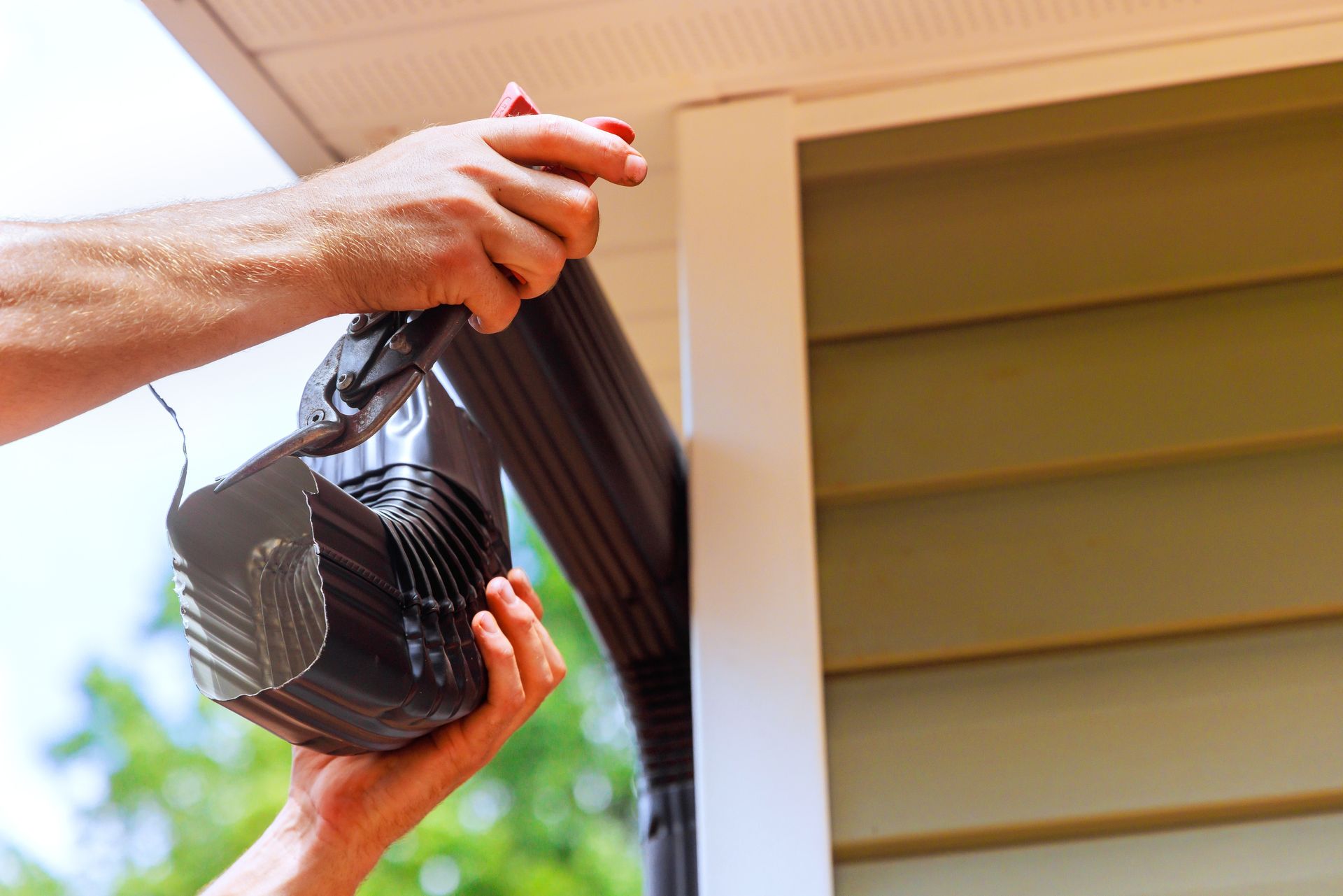
Sizing and Slope for North Texas Rainfall Patterns
You receive gutters sized to your roof's square footage and pitched at a slope that moves water efficiently without creating standing pools or overflow during peak flow. Quick Roof Repairs uses five-inch or six-inch channels depending on the roof area and typical rainfall intensity, and each downspout is positioned to drain into splash blocks, extensions, or buried drainage lines that carry water at least six feet from the foundation.
After installation, you'll notice that water flows cleanly off the roof and into the gutters during rain, with no spillover at the corners or leaks at the seams. The ground along your foundation stays dry, and you no longer see erosion trenches or mud buildup where water used to pour off the roof edge. The system continues to perform through repeated storms without sagging or pulling away from the fascia, because the hangers and fasteners are placed at intervals that distribute the weight of standing water.
This service includes measurement and layout, fabrication or cutting of gutter sections to fit your roofline, installation of hangers and end caps, placement of downspouts, and connection to drainage extensions where needed. If your fascia requires repair before gutters can be mounted securely, that work is completed first. This service does not include underground drainage installation, gutter guards, or fascia replacement beyond what's needed for secure mounting.
What You Should Know Before Installing Gutters
Homeowners in Cedar Hill often ask about material choices, maintenance needs, and how to prevent clogs in a system that handles heavy seasonal runoff.
What gutter material holds up best in Texas weather?
Aluminum resists rust and handles heat expansion without warping, while steel is stronger but requires coating to prevent corrosion, and copper lasts decades but costs significantly more upfront.
How much slope do gutters need to drain properly?
Gutters need a slope of at least one-quarter inch per ten feet of run, enough to keep water moving toward the downspouts without creating a visible tilt that looks uneven from the ground.
When should you add extra downspouts in Cedar Hill?
Extra downspouts are needed when a single run exceeds forty feet, when the roof drains a large surface area into one section, or when the existing downspout locations don't allow water to be routed away from the foundation effectively.
What causes gutters to overflow during heavy rain?
Overflow happens when the gutter size is too small for the roof area, when the slope is incorrect and water pools instead of draining, or when debris clogs the downspout outlet and backs up the system.
Why do some gutters pull away from the fascia?
Gutters pull away when hangers are spaced too far apart, when the fascia board is rotten and can't hold the fasteners, or when standing water or ice adds more weight than the mounting system was designed to support.
Quick Roof Repairs installs gutters for homeowners throughout Cedar Hill who need reliable drainage during the region's intense rainfall. If you're planning new construction, replacing a failed system, or adding gutters to a home that never had them, contact us to review your roofline and discuss a system that fits your drainage needs and site conditions.